
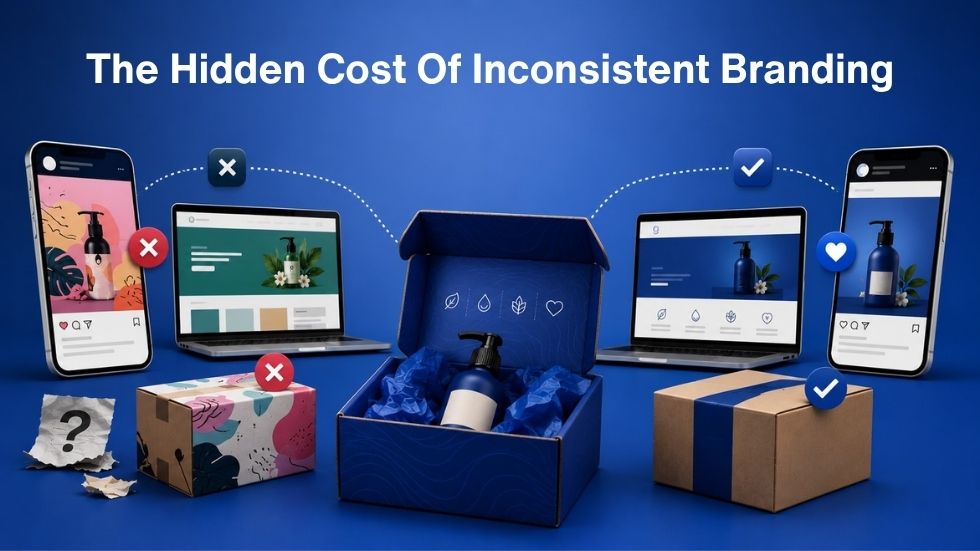
A customer is scrolling through Instagram when a beautifully designed advertisement catches their attention. The visuals feel polished, the messaging is clear, and the brand seems professional. Curious, they click through to the website. But something feels different. The colors don’t quite match the advertisement, the tone of the content feels unrelated, and the overall experience seems disconnected. A few days later, if they happen to receive a product from the same company, the packaging introduces yet another visual style. This is exactly why businesses invest in D2C Branding and Packaging Design. Without consistency, even strong marketing efforts can lose their impact because customers struggle to connect all these interactions to the same brand.
Most businesses don’t wake up one morning and decide to become inconsistent. It usually happens gradually. A new campaign is launched by one team, a website update is handled by another, and packaging is redesigned months later without considering the bigger picture. Individually, these decisions may seem harmless. Together, they can create a fragmented brand experience that quietly affects customer perception, marketing performance, and long-term growth.
Customers Start Remembering Pieces Instead of the Brand

Think about the brands you instantly recognize. Chances are you can picture their colors, visual style, messaging, and overall personality without much effort. That happens because every interaction reinforces the same impression over time.
Inconsistent branding disrupts this process. Customers may remember a specific advertisement, a social media post, or even a product they purchased, but they struggle to connect those experiences to a single brand identity. Instead of building a clear memory of the business, they remember isolated moments. When the time comes to make another purchase, the brand is less likely to be top of mind because those connections were never fully established.
The Buying Decision Takes Longer
Customers naturally gravitate toward businesses that feel familiar and easy to understand. Consistency reduces the mental effort required to evaluate a company because customers know what to expect.
When branding varies across different channels, people often spend more time trying to determine whether they are dealing with the same business. Conflicting visuals, inconsistent messaging, and disconnected experiences create uncertainty. Even small moments of confusion can slow down decision-making and increase the likelihood that customers will explore other options instead.
In highly competitive markets, those extra moments of hesitation can make a significant difference.
Your Marketing Budget Works Less Efficiently
Every marketing campaign should strengthen the impact of previous campaigns. Ideally, each advertisement, email, blog article, or social media post adds another layer of familiarity to the brand.
When branding lacks consistency, that cumulative effect becomes much weaker. Customers encounter messages that feel disconnected rather than connected. Instead of building momentum, businesses often find themselves repeatedly reintroducing their brand to the same audience.
The result is that marketing investments generate attention without always generating lasting brand recognition. Over time, this can make customer acquisition more expensive than it needs to be.
Inconsistency Makes Premium Brands Look Less Premium

Customers often associate consistency with quality. Luxury brands, established companies, and highly trusted businesses typically present themselves in a clear and unified way across every customer touchpoint.
When a company’s logo design, packaging design, website design, and marketing materials feel unrelated, it can weaken perceptions of professionalism. Customers may not consciously identify the problem, but they often sense when something feels disorganized.
This perception matters because people are generally more willing to pay premium prices when a brand appears confident, polished, and cohesive.
Also Read: Brand Messaging Across Different Platforms: Maintaining Consistency
Customer Loyalty Becomes Harder to Earn
Repeat purchases are rarely driven by products alone. Customers return because they develop familiarity with a brand and feel comfortable choosing it again.
Consistency plays an important role in creating that familiarity. Every positive interaction should reinforce previous experiences and strengthen the customer’s relationship with the brand. When touchpoints feel disconnected, that relationship becomes more difficult to build.
A customer may still appreciate the product, but they are less likely to develop the strong emotional connection that often drives long-term loyalty.
Teams Begin Telling Different Stories
One hidden consequence of inconsistent branding happens inside the business itself. Without clear branding standards, different departments often communicate in different ways.
Marketing may position the company one way while sales emphasizes something completely different. Designers may create visuals that don’t align with customer communications. Social media marketing may present a personality that feels unrelated to the experience customers receive after making a purchase.
Over time, these differences make it harder for employees to communicate a unified message. If internal teams are not aligned, customers will inevitably notice the inconsistency as well.
Competitors Gain an Advantage Without Doing Anything Better
Sometimes businesses assume competitors are growing because they have superior products or larger marketing budgets. While that can be true, perception often plays an equally important role.
A competitor with consistent branding can appear more trustworthy, memorable, and established even when their products are similar. Customers often interpret consistency as a sign of professionalism and stability.
This means inconsistent branding doesn’t just weaken your own position. It can unintentionally make competing brands look stronger in comparison.
Every Customer Touchpoint Shapes Perception
Modern customers interact with businesses through far more channels than ever before. They may discover a company through social media marketing, visit the website, read blog content, receive emails, interact with customer support, and eventually experience the packaging.
Each of these interactions contributes to the overall perception of the brand. Strong branding ensures those experiences feel connected and reinforce the same message. Graphic design, visual identity, tone of voice, and customer experience should all work together to create a cohesive impression.
The goal is not for every touchpoint to look identical. The goal is for every touchpoint to feel like it belongs to the same brand.
Small Inconsistencies Create Big Problems Over Time
A single off-brand social media post will not damage a company. An outdated marketing brochure is unlikely to cause major problems on its own. The real challenge comes from accumulation.
Small inconsistencies compound over months and years. Different colors appear in different places. Messaging changes. Visual styles evolve without direction. Gradually, the brand becomes harder to recognize and harder to remember.
Because these changes happen slowly, many businesses do not notice the impact until they begin struggling with awareness, differentiation, or customer loyalty. By that point, the hidden cost has already accumulated.
The hidden cost of inconsistent branding is rarely visible in a single metric or business report. Instead, it appears through weaker recognition, slower customer decisions, reduced marketing efficiency, lower perceived value, and missed opportunities to build stronger customer relationships.
Successful brands understand that consistency is not about repetition for the sake of repetition. It is about creating a clear and reliable experience that customers can recognize wherever they encounter the business. From logo design and packaging design to website design, graphic design, and social media marketing, every touchpoint should contribute to the same story.
When branding feels connected, customers spend less time figuring out who a company is and more time remembering why they chose it in the first place.
