
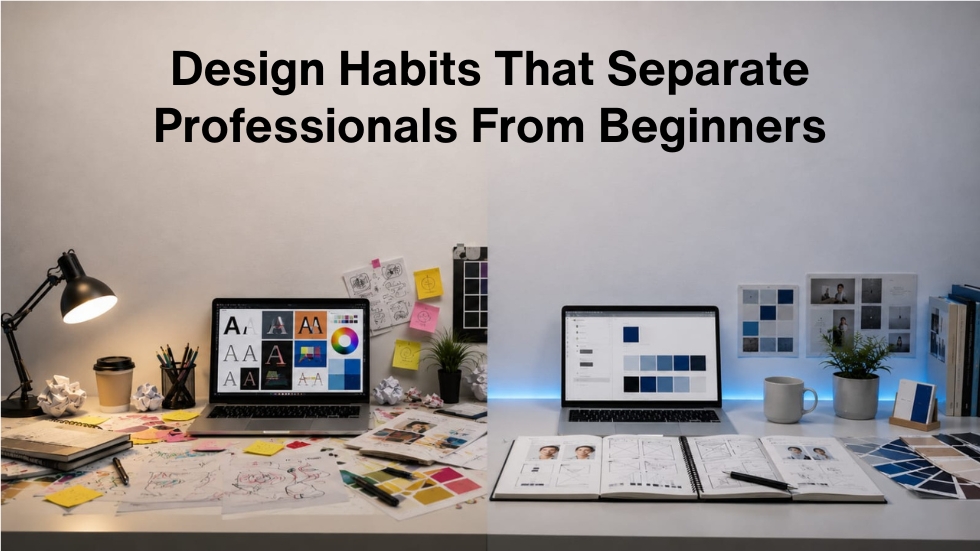
A memorable logo design rarely begins with a blank artboard. It begins with curiosity. Imagine watching two designers receive the exact same project brief. Within minutes, one opens design software and starts experimenting with fonts, colors, and icons. The other closes the laptop, picks up a notebook, and starts asking questions. At first glance, the first designer appears more productive. Hours later, however, it’s often the second designer who delivers the stronger solution. The difference isn’t talent or software. It’s the habits that guide every decision before the design process even begins.
This is one of the biggest misconceptions about design. Many people assume professionals create better work because they know more shortcuts or own better equipment. In reality, experienced designers simply approach problems differently. They understand that great design isn’t about making things look impressive. It’s about making them communicate clearly, consistently, and purposefully.
They Spend More Time Understanding Than Designing

Imagine being asked to redesign the menu of a restaurant you’ve never visited. You could immediately start choosing fonts and arranging photographs, but without understanding the customers, pricing, atmosphere, and dining experience, your design would rely entirely on guesswork.
Professional designers avoid this trap by spending more time gathering information than most beginners expect. They research competitors, study customer behavior, ask thoughtful questions, and understand business goals before opening a design application. This preparation gives every design decision meaning. Instead of decorating a page, they’re solving a communication problem.
Ironically, slowing down at the beginning often makes the entire project faster because fewer decisions need to be corrected later.
Every Choice Has a Reason
Beginners often design based on instinct. They choose a certain font because it feels modern or use a particular color simply because they like it. Professionals approach design with a different mindset. Every visual decision should have a purpose that supports the project’s objective.
If someone asks why a headline is larger, why blue appears only on call-to-action buttons, or why a product image sits in a specific position, an experienced designer can explain the reasoning behind each choice. Design becomes less about personal preference and more about guiding attention, improving readability, and creating better user experiences.
This habit transforms creativity into strategy, which is what separates attractive designs from effective ones.
Also Read: Color Choices That Influence Customer Perception
They Don’t Chase Every Trend
The design world changes constantly. One year minimalism dominates, the next year bold typography becomes popular, followed by gradients, glassmorphism, or expressive illustrations. Beginners often feel pressure to incorporate every new trend because they fear looking outdated.
Professionals certainly pay attention to trends, but they don’t allow trends to dictate every project. They understand that a business identity should remain recognizable for years, not just until the next design trend appears. Whether they’re creating a website, a product package, or a visual identity, they ask whether a trend genuinely improves communication or simply makes the work look fashionable for a short period.
Timeless design almost always outlasts trendy design.
Also Read: Before You Redesign Your Brand, Read This
They Build Systems Instead of Individual Designs

One beautifully designed Instagram post doesn’t create a brand. Neither does a single advertisement or homepage. Professional designers think much bigger than individual projects. They create visual systems that can be repeated consistently across every customer interaction.
This approach becomes especially important in D2C Branding, where customers interact with businesses through multiple platforms before making a purchase. Social media, emails, websites, packaging, and advertisements should all feel connected rather than created independently. Consistency builds familiarity, and familiarity builds trust.
Beginners often focus on making one design look good. Professionals focus on making hundreds of future designs work together.
They Respect White Space
One habit that surprises new designers is how comfortable professionals are with leaving empty space.
Beginners often feel the need to fill every corner with text, icons, images, or decorative elements because empty areas seem unfinished. Experienced designers know the opposite is true. White space gives important information room to breathe. It improves readability, directs attention, and prevents visual overload.
Instead of asking, “What else can I add?” professionals frequently ask, “What can I remove?” The result is usually cleaner, stronger communication that feels easier for customers to understand.
They Think About Real People, Not Perfect Screens
Designs rarely exist in ideal conditions. A website might be viewed on a small phone while someone stands in line for coffee. Packaging may sit on a crowded retail shelf surrounded by competing products. A logo could appear on a billboard, an email signature, or a tiny social media profile picture.
Professional designers constantly think about these situations while they work. Strong website design isn’t judged by how it looks only on a designer’s monitor. It succeeds because it remains clear and functional wherever customers encounter it. The same principle applies to every design discipline. Real-world usability matters just as much as visual appeal.
Details Quietly Shape Quality
Most customers won’t consciously notice that margins are perfectly aligned or that spacing between elements is mathematically consistent. They will, however, notice how the overall design makes them feel.
Professionals spend significant time refining details that appear almost invisible. They adjust typography by a few pixels, balance visual weight, align elements precisely, and ensure every component feels intentional. These refinements may seem minor individually, but together they create work that feels polished and trustworthy.
This level of precision becomes especially noticeable in packaging design, where customers often associate careful presentation with product quality itself.
Feedback Is Treated as an Asset
Receiving criticism can be uncomfortable, especially when you’ve invested hours into a design. Beginners sometimes defend every decision because the work feels personal. Professionals understand something different.
Feedback isn’t an attack on creativity. It’s additional information.
Clients understand their business. Customers understand their own expectations. Colleagues often notice things the original designer overlooked. Instead of protecting their first idea, experienced designers use feedback to strengthen the final solution. Their goal isn’t proving they were right. Their goal is creating the best possible outcome.
That mindset allows their work to improve continuously.
They Think Beyond the Product

A beginner designing packaging may focus entirely on making the box look attractive. A professional asks what happens after the customer opens it.
Does the packaging create excitement? Is it easy to unpack? Does it photograph well for social media? Will customers instantly recognize the brand if they order again? These questions transform packaging from a container into part of the customer experience.
A skilled packaging design company considers these moments because modern branding doesn’t end when a purchase is completed. Every interaction contributes to how customers remember the business.
Learning Never Becomes Optional
One surprising characteristic shared by experienced designers is that they rarely describe themselves as having “finished learning.” They constantly analyze advertisements, study branding projects, explore new technologies, and observe changing customer behaviors.
The design industry evolves alongside technology and consumer expectations. Designers who stop learning eventually stop growing. Those who remain curious continue finding better ways to solve problems. Over time, this habit often becomes more valuable than natural artistic ability because continuous improvement compounds year after year.
The Difference Isn’t Talent. It’s Discipline.
When people admire exceptional design, they often assume the designer possesses extraordinary creativity. Creativity certainly matters, but professional-quality work usually comes from consistent habits rather than occasional inspiration.
Professionals research before designing. They simplify instead of adding unnecessary complexity. They test ideas, refine details, welcome feedback, and think about customers before thinking about themselves. None of these habits are dramatic, yet together they create work that consistently performs at a higher level.
Talent may open the door, but disciplined habits are what build lasting careers.
The gap between beginners and professionals isn’t defined by expensive software, years of experience, or artistic talent alone. It’s shaped by the daily habits that influence every creative decision. Researching before designing, thinking strategically, embracing feedback, respecting simplicity, and maintaining consistency all contribute to work that feels purposeful instead of accidental.
Whether you’re designing a logo, building a website, or creating D2C packaging design, these habits remain remarkably consistent across every project. Professional designers don’t simply make things look beautiful. They solve problems, improve experiences, and communicate ideas with clarity. The encouraging part is that these habits aren’t inherited. They’re developed through practice, curiosity, and the willingness to keep learning long after every project is finished.
