
Hiring a professional graphic design company is often one of the first steps businesses take before launching a Shopify store. The logo looks polished, the products are uploaded, the website goes live, and excitement is at an all-time high. Then something unexpected happens. Hundreds of people visit the store, but only a handful actually place an order. It raises a frustrating question: if the products are good and people are visiting, why aren’t they buying? The answer usually has very little to do with the product itself. The highest-converting Shopify stores don’t simply sell products. They remove hesitation, create confidence, and make buying feel like the obvious next step.
Great Stores Don’t Sell Products. They Sell Confidence
Imagine buying from an online store you’ve never heard of. The product looks interesting, but small questions immediately start appearing in your mind. Is this website legitimate? Will the product look the same in real life? What happens if I need to return it?
Every visitor has these thoughts, even if they don’t realize it. High-converting Shopify stores understand this and answer those questions before customers ever ask them. Instead of trying to persuade people with aggressive discounts, they build confidence through thoughtful design, transparent policies, authentic product photography, and clear communication. Customers rarely buy because they’ve been convinced. More often, they buy because all of their doubts quietly disappear.
Decision Fatigue Is the Silent Conversion Killer
Many businesses believe offering more choices leads to more sales. In reality, too many options often have the opposite effect.
Imagine walking into a café with 150 different coffee drinks. Instead of feeling excited, you would probably spend more time deciding than enjoying the experience. Online shopping works the same way. When visitors see dozens of categories, endless homepage banners, multiple pop-ups, and overwhelming navigation menus, making a purchase suddenly feels like work.
The best Shopify stores simplify every decision. They guide visitors toward featured collections, recommend a small number of relevant products, and create a shopping journey that feels effortless. Less confusion almost always leads to more conversions.
Every Page Should Have One Job
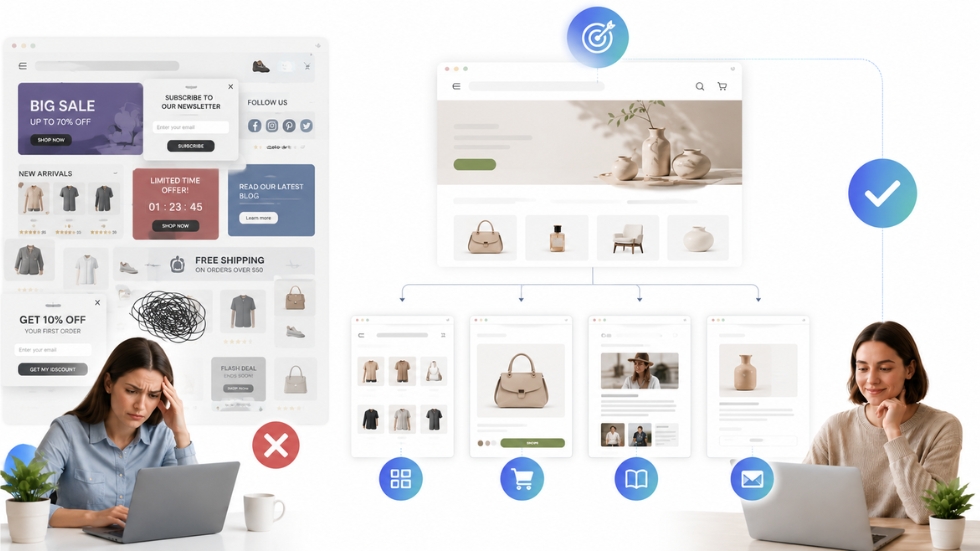
One of the biggest differences between average Shopify stores and successful ones is focus. Many websites try to accomplish everything on every page. They promote discounts, encourage newsletter signups, highlight blog articles, advertise social media accounts, and showcase every collection all at once.
High-performing stores take a completely different approach. Every page has a single purpose. The homepage introduces the brand. Collection pages help customers browse. Product pages encourage purchases. Blog articles educate visitors. Because every page has one clear objective, customers always know what to do next. Removing unnecessary distractions creates momentum, and momentum is what moves people closer to making a purchase.
The Smallest Words Often Make the Biggest Difference
When businesses think about improving conversions, they usually focus on large changes like redesigning their homepage or running new advertising campaigns. Surprisingly, some of the biggest improvements come from changing just a few words.
Simple phrases such as “Ships within 24 hours,” “Free exchanges,” “Secure checkout,” or “Only a few left in stock” provide reassurance exactly when customers need it most. These tiny pieces of text are called microcopy, and they quietly influence buying decisions throughout the shopping journey.
Excellent website design is not only about attractive layouts. It is also about using language that removes uncertainty and helps customers feel comfortable clicking the purchase button.
The Best Stores Know When Not to Sell
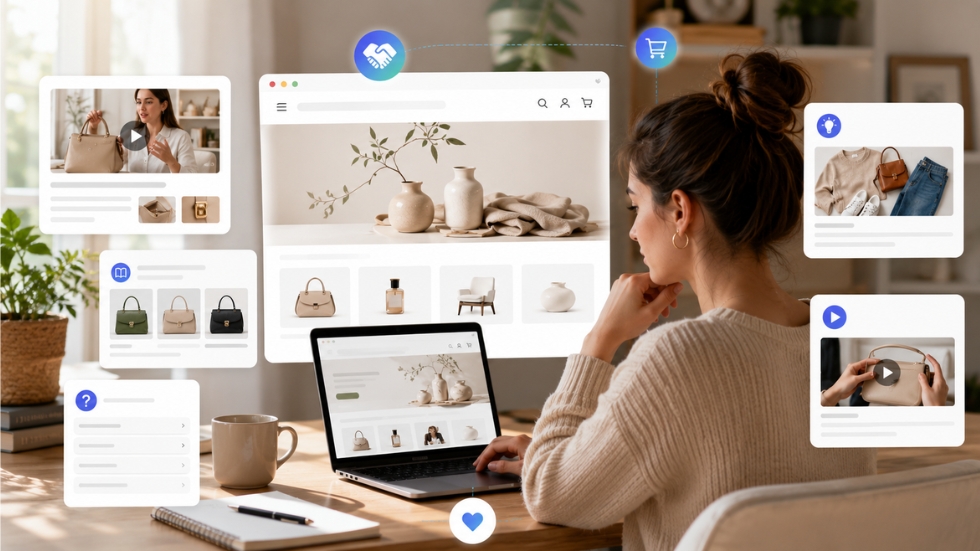
One interesting habit shared by many successful Shopify stores is that they don’t constantly ask visitors to buy something.
Instead, they spend time educating customers. They publish buying guides, answer common questions, explain product materials, share styling ideas, or demonstrate products through videos. By helping visitors make informed decisions instead of pushing immediate sales, they naturally build credibility.
This approach is particularly valuable for businesses investing in D2C Branding. When customers begin seeing a brand as helpful rather than sales-focused, they are far more likely to return when they’re ready to purchase.
Social Proof Works Best When It Feels Natural
Most Shopify stores include reviews because they know customers expect them. However, successful stores use social proof much more strategically.
Instead of displaying hundreds of reviews in one section, they place customer feedback exactly where shoppers are most likely to hesitate. Product pages include testimonials related to quality, checkout pages reinforce trust through ratings, and galleries showcase real customers using the products in everyday situations.
Seeing other people enjoy a product reduces uncertainty far more effectively than reading a long sales pitch. Customers trust customers, which is why thoughtful placement of social proof consistently improves conversions.
A Brand Should Feel Familiar Before Customers Buy
People naturally trust businesses that feel familiar, even if they have never purchased from them before. Familiarity comes from consistency.
A recognizable logo design, consistent typography, cohesive product photography, and a unified visual style make a business feel established rather than temporary. Customers begin recognizing the brand across social media, email marketing, advertisements, and the website itself. That familiarity creates comfort, and comfort often leads to purchasing decisions.
Building that consistency takes time, which is why many businesses choose to work with an experienced branding team instead of treating every design element as a separate project.
The Experience Should Continue After Checkout
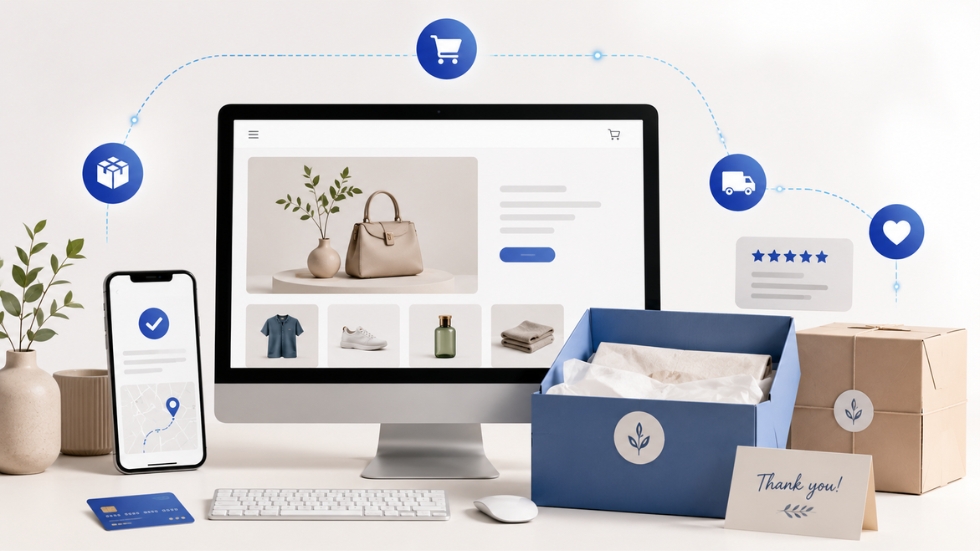
For many businesses, the customer journey ends once payment is complete. High-converting brands think differently. They understand that today’s customer could become tomorrow’s repeat customer if the post-purchase experience exceeds expectations.
Order updates, delivery communication, thoughtful follow-up emails, and premium packaging design all contribute to how customers remember the brand. Receiving a carefully packaged order feels completely different from opening a plain shipping box with no personality. Businesses working with a professional packaging design company often view packaging as another marketing tool rather than simply a way to protect products during shipping.
For modern eCommerce businesses, thoughtful D2C packaging design reinforces the same identity customers experienced while shopping online. The purchase feels complete because every touchpoint reflects the same level of care.
The Highest-Converting Stores Never Stop Improving
Perhaps the biggest misconception about Shopify is that once a store is launched, the work is finished. In reality, the most successful stores treat their websites as ongoing projects.
They regularly test new layouts, update product photography, improve descriptions, analyze customer behavior, and experiment with different calls to action. They understand that customer expectations evolve, and their websites need to evolve alongside them.
Instead of asking, “Is our store finished?” they ask, “What can we improve this month?” That mindset creates gradual improvements that eventually produce significant increases in conversions.
The reason some Shopify stores convert better than others has very little to do with luck or even the products they sell. Successful stores understand customer psychology. They reduce hesitation instead of increasing pressure. They simplify decisions instead of creating more choices. They educate instead of constantly selling, and they improve continuously instead of assuming the first version of their website is good enough.
The highest-converting Shopify stores are built around people, not products. Every design decision, every piece of content, and every customer interaction is carefully planned to make buying feel simple, natural, and reassuring. When businesses focus on creating that kind of experience, conversions become the result rather than the goal.
