
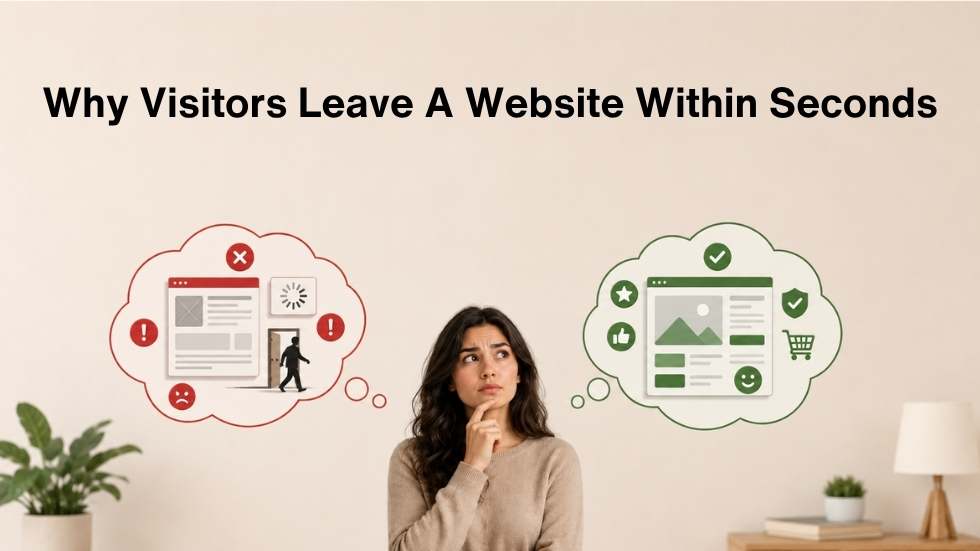
Imagine this.
You search for a product online, click on a website that seems promising, and within five seconds you’ve already decided to leave. Maybe the homepage looks cluttered. Maybe the text is impossible to read. Or perhaps the site simply doesn’t feel trustworthy. You don’t consciously analyze every detail. You just close the tab and move on.
This happens thousands of times every day, and it’s one of the biggest reasons businesses struggle to convert visitors into customers. Even companies that invest heavily in advertising, social media marketing, or D2C Branding and Packaging Design often lose potential buyers because their website fails to make the right first impression. The truth is, attracting visitors is only half the battle. Keeping them interested is where the real challenge begins.
The First Impression Happens Faster Than You Think
Most people don’t arrive on your website intending to study it carefully. They’re scanning for answers. Within moments, they’re asking themselves questions like, “Does this look professional?” “Can I trust this business?” and “Is it worth my time?”
Interestingly, people don’t usually notice individual design elements. Instead, they experience everything as a whole. The layout, colors, typography, navigation, and imagery work together to create an emotional response. If your website design feels polished and easy to understand, visitors naturally feel more comfortable exploring further. If it feels confusing or outdated, they often leave without giving your business a chance.
Your Brand Starts Speaking Before Any Words Are Read
Many businesses believe their written content is what persuades customers. In reality, your brand starts communicating long before anyone reads your headline or product description.
Your logo design, color palette, imagery, and overall graphic design instantly shape how people perceive your company. A clean, consistent visual identity suggests professionalism and reliability, while inconsistent branding creates uncertainty. Even if your products are exceptional, poor presentation can make visitors question the quality of your business before they’ve learned anything about it.
People naturally trust businesses that appear organized, confident, and consistent because those visual signals reduce uncertainty.
Confusion Is One of the Biggest Reasons Visitors Leave
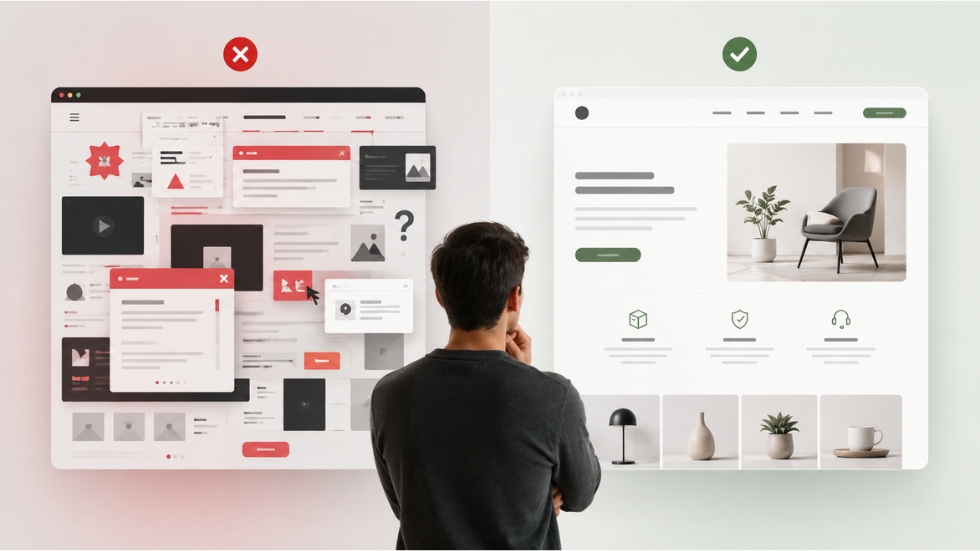
Think about walking into a store where nothing is labeled, products are scattered everywhere, and no one is available to help. You probably wouldn’t stay very long.
The same principle applies online. Visitors expect to immediately understand what your business offers and where they should go next. If your homepage is overloaded with animations, multiple competing messages, or unclear navigation, people quickly become frustrated.
Good website design removes friction instead of creating it. Clear menus, logical page structures, readable typography, and simple calls to action help visitors feel comfortable because they don’t have to work to find information. The easier your website is to use, the longer people are willing to stay.
Consistency Builds Trust Across Every Platform
Imagine discovering a business through Instagram. The posts look premium, the colors feel consistent, and the messaging is clear. Then you visit the website, only to find completely different fonts, different colors, and a layout that feels disconnected from everything you just saw.
That inconsistency immediately creates doubt.
Successful businesses treat every customer touchpoint as part of one larger experience. Whether someone sees your advertisement, visits your website, receives your product, or interacts with your customer service, everything should feel connected. Strong branding ensures customers recognize your business wherever they encounter it, making them more likely to remember and trust you over competitors.
Also Read: The Hidden Cost Of Inconsistent Branding
Speed Matters More Than Most Businesses Realize
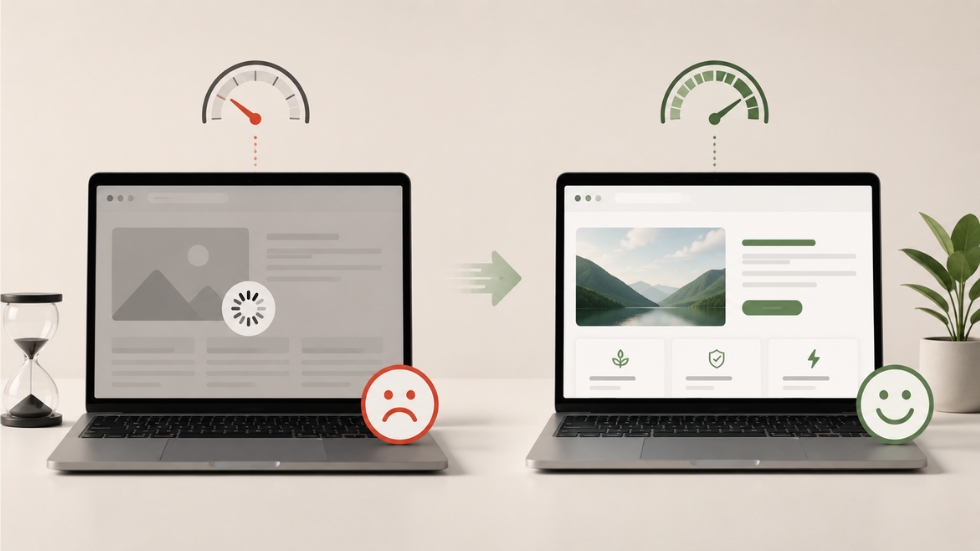
Even the most beautiful website can’t succeed if it takes too long to load.
Today’s users have incredibly short attention spans because they have endless alternatives available. If your pages load slowly, images aren’t optimized, or buttons take too long to respond, many visitors will leave before they even see your content.
Website speed isn’t just a technical issue. It’s part of the overall customer experience. Fast-loading websites communicate professionalism and reliability, while slow websites create frustration before visitors have even interacted with your business. Every second of delay increases the chances that someone will abandon your site and continue searching elsewhere.
Great Design Creates Confidence
People don’t always buy the cheapest product or choose the business with the longest list of features. They often choose the company that feels the most trustworthy.
This is where thoughtful graphic design makes an enormous difference. Clean layouts, high-quality imagery, consistent spacing, and professional typography create an experience that feels intentional. Rather than distracting visitors, good design guides their attention naturally from one section to the next.
When people feel confident navigating your website, they’re far more likely to browse additional pages, learn about your services, and eventually make a purchase or inquiry.
Your Packaging and Website Should Tell the Same Story
For businesses selling physical products, the customer experience doesn’t begin when the package arrives. It begins the moment someone visits the website.
If your packaging design communicates luxury, sustainability, or premium quality, your website should reinforce those same values. The photography, colors, messaging, and overall visual style should feel like parts of the same story rather than separate projects.
This consistency is especially important for direct-to-consumer businesses because customers often interact with your website long before they ever hold your product. When your digital presence matches your physical branding, customers feel reassured that they’ve made the right choice.
Social Media Can Bring Visitors, But Your Website Must Convert Them
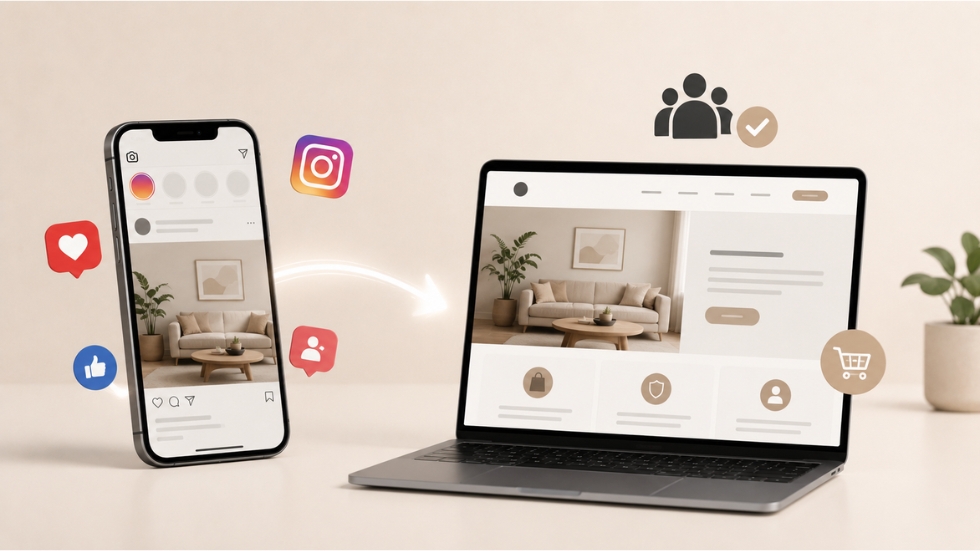
Businesses often focus heavily on increasing followers, posting every day, and running paid campaigns. While social media marketing is incredibly valuable for attracting attention, it cannot compensate for a poor website experience.
Think of social media as the invitation rather than the destination. It encourages people to visit your website, but what happens next determines whether they become customers. If visitors arrive and immediately encounter confusing navigation, inconsistent branding, or outdated visuals, the marketing effort loses much of its impact.
The businesses that achieve long-term success understand that marketing and design work together. One attracts attention, while the other builds trust and encourages action.
Every visitor who lands on your website is making a series of rapid decisions, often without realizing it. They notice how your brand feels before they analyze what your business actually offers. They judge trust through design, clarity through navigation, and professionalism through consistency.
Improving your website isn’t simply about making it look more attractive. It’s about creating an experience that feels effortless, trustworthy, and aligned with your overall brand identity. When your website design, branding, logo design, graphic design, packaging design, and social media marketing all work together, visitors are far more likely to stay, explore, and ultimately become loyal customers.
