
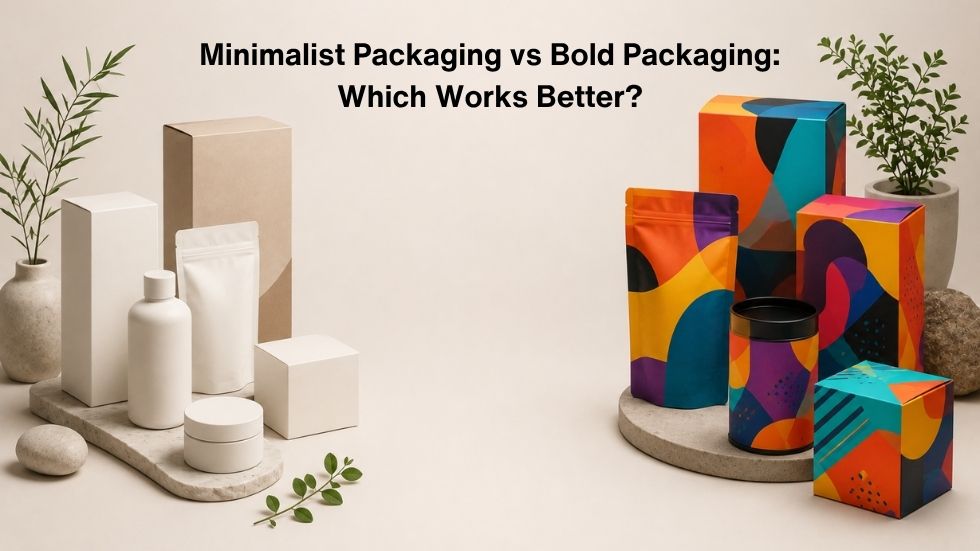
Two products sit side by side on a store shelf. One uses clean white space, simple typography, and a restrained color palette. The other is filled with vibrant colors, large graphics, and attention-grabbing design elements. Both products are competing for the same customer’s attention, yet they are taking completely different approaches to get noticed.
This contrast raises an interesting question for brands and designers alike. Is it better to keep packaging simple and refined, or should packaging be bold and impossible to ignore?
The truth is that both approaches can be incredibly effective when used correctly. The real challenge is understanding how each style influences customer perception and which one aligns best with the brand, product, and audience.
Why Packaging Matters in the First Place

Before comparing minimalist and bold packaging, it is important to understand why packaging has such a powerful influence on buying decisions. In many cases, packaging creates the first interaction between a customer and a product.
Consumers often make quick judgments about quality, value, trustworthiness, and brand personality based entirely on visual cues. Colors, typography, materials, imagery, and layout all work together to create those impressions before the product is ever used.
Because of this, packaging is not simply a protective container. It is a communication tool that helps shape how customers perceive the brand from the very beginning.
Also Read: How Packaging Influences Buying Decisions In Seconds
The Appeal of Minimalist Packaging
Minimalist packaging focuses on simplicity. Rather than filling every available space with graphics and information, it relies on clean layouts, intentional design choices, and carefully selected visual elements.
This approach often creates a sense of sophistication and confidence. By removing unnecessary distractions, minimalist packaging allows the product and brand message to stand out more clearly. Customers frequently associate this style with premium quality, modern design, and attention to detail.
Many luxury brands and contemporary consumer products use minimalist packaging because it communicates refinement without needing excessive visual decoration.
How Minimalist Packaging Influences Perception

One reason minimalist packaging works so well is that it feels effortless. When customers encounter a clean and organized design, they often perceive the product as more trustworthy and professional.
Minimalist designs also make information easier to process. Instead of overwhelming consumers with competing visual elements, they guide attention toward the most important details. This can be especially valuable when customers are making quick decisions in crowded retail environments.
However, simplicity requires careful execution. If too much is removed, packaging can begin to feel generic, forgettable, or lacking personality.
The Power of Bold Packaging
Bold packaging takes a very different approach. Rather than blending into the background, it aims to capture attention immediately through strong colors, striking typography, large imagery, and energetic design choices.
This style is often used by brands that want to communicate excitement, creativity, confidence, or innovation. Bold packaging can create a strong emotional reaction and make products more noticeable on crowded shelves.
In highly competitive markets, attracting attention can be half the battle. Bold packaging often succeeds because it encourages customers to stop, look closer, and consider the product.
How Bold Packaging Shapes Brand Identity
Bold packaging does more than attract attention. It can also help establish a distinctive brand personality. Vibrant visuals and confident design choices often make brands appear energetic, memorable, and expressive.
For products aimed at younger audiences or categories where excitement plays a major role in purchasing decisions, bold packaging can create a strong competitive advantage. It allows brands to communicate personality quickly and effectively.
The challenge is maintaining balance. If packaging becomes too busy or overwhelming, customers may struggle to understand the product or find important information.
Which Style Stands Out More?
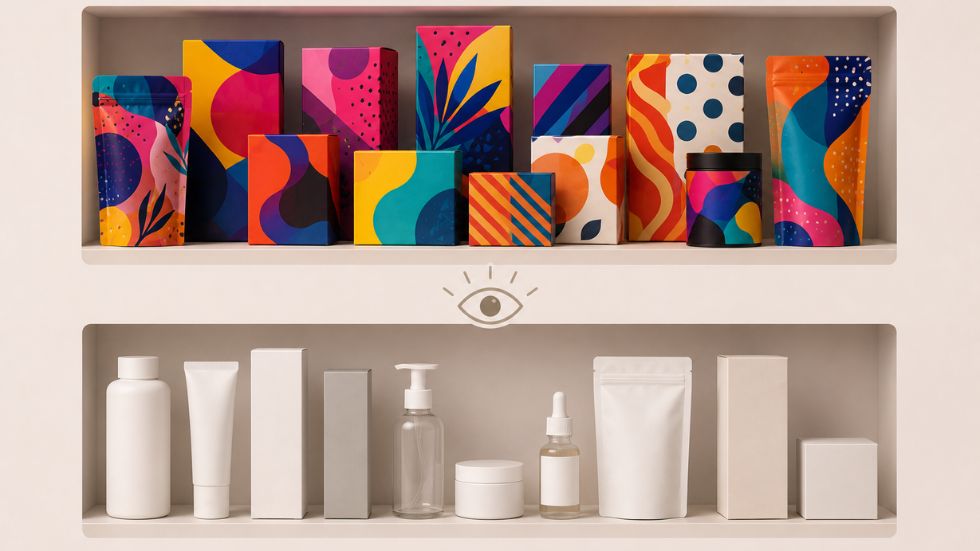
Many people assume bold packaging always stands out more, but the answer is not that simple. Context plays a significant role in determining what captures attention.
In a category filled with colorful and highly visual products, minimalist packaging may actually become the most noticeable option because it looks different from everything around it. On the other hand, in a category dominated by simple designs, bold packaging may become the visual focal point.
Standing out is often less about the design style itself and more about how effectively it differentiates the product from its surroundings.
Audience Expectations Matter
The effectiveness of packaging is heavily influenced by the people it is designed for. Different audiences respond to different visual cues based on their preferences, lifestyles, and purchasing habits.
A premium skincare brand may benefit from minimalist packaging because customers often associate simplicity with quality and sophistication. A children’s snack brand, however, may achieve better results with colorful and energetic packaging that feels playful and engaging.
Successful packaging aligns not only with the brand identity but also with the expectations of the intended audience.
Also Read: The Psychology Behind Audience-Centric Branding
The Best Packaging Supports the Brand
One of the biggest mistakes brands make is choosing a packaging style simply because it is trendy. A design approach that works brilliantly for one company may feel completely wrong for another.
The most effective packaging is the packaging that supports the overall brand strategy. If a brand wants to communicate elegance, simplicity, and premium quality, minimalist packaging may be the right choice. If the goal is to communicate energy, creativity, and excitement, bold packaging may be more appropriate.
Packaging works best when it reflects the brand’s personality rather than following design trends without purpose.
There Is No Universal Winner
The debate between minimalist and bold packaging often assumes that one approach is objectively better than the other. In reality, both styles have strengths and weaknesses.
Minimalist packaging excels at communicating sophistication, clarity, and modernity. Bold packaging excels at attracting attention, expressing personality, and creating strong visual impact. The right choice depends on the product, audience, competitive landscape, and brand positioning.
Rather than asking which style is better, brands should focus on which style communicates their identity most effectively
Minimalist packaging and bold packaging represent two very different approaches to visual communication, yet both can be highly successful when executed thoughtfully.
Minimalist designs often create feelings of quality, elegance, and trust through simplicity and restraint. Bold designs capture attention and communicate personality through confidence and visual energy. Neither approach guarantees success on its own.
The strongest packaging is not defined by how simple or how bold it is. It is defined by how effectively it communicates the brand, connects with the audience, and helps customers make a decision. When packaging aligns with those goals, it becomes far more than a design choice. It becomes a powerful branding tool.
FAQs
1. What is minimalist packaging?
Minimalist packaging uses simple layouts, limited design elements, clean typography, and intentional use of space to create a refined and focused presentation.
2. What is bold packaging?
Bold packaging uses strong colors, large graphics, eye-catching typography, and expressive visual elements to attract attention and create impact.
3. Is minimalist packaging always better for premium brands?
Not always. While many premium brands use minimalist packaging, the best approach depends on the brand’s identity, audience, and market positioning.
4. Which packaging style attracts more attention?
It depends on the context. Bold packaging often attracts immediate attention, but minimalist packaging can stand out more in categories where competitors use busy designs.
5. How should brands choose between minimalist and bold packaging?
Brands should consider their audience, product category, competitive environment, and overall brand identity before deciding which packaging style best supports their goals.
