
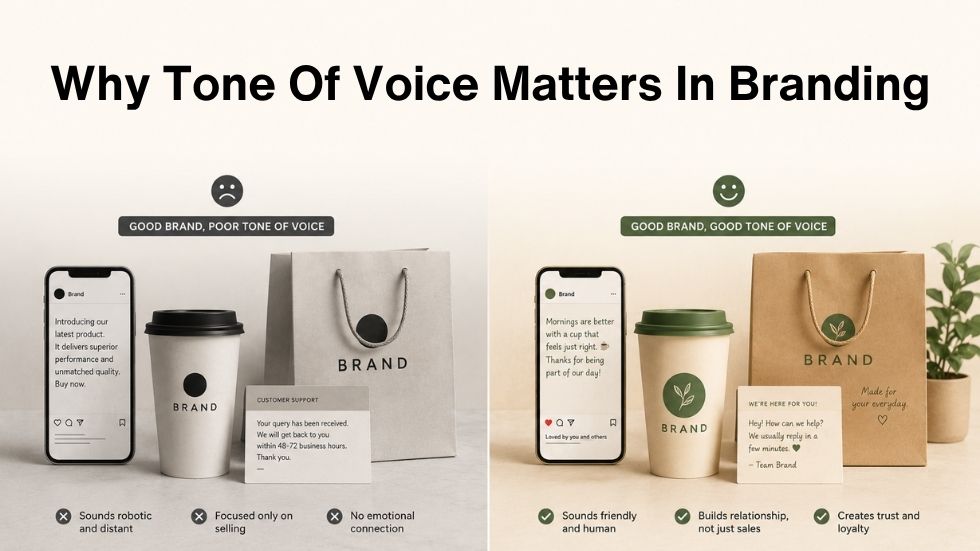
Two coffee shops can sell the exact same cappuccino. Same beans, same price, same cozy interiors, and maybe even the same type of audience walking through the door every morning.
But somehow, one brand feels warm and welcoming while the other feels completely forgettable. One makes you want to come back, follow them online, and recommend them to friends. The other simply sells coffee and disappears from memory the moment you leave.
That difference usually has nothing to do with the product itself.
It comes from the way the brand communicates. The words brands choose, the tone they use, the captions they write, and even the way they reply to comments slowly shape how people emotionally experience them over time.
That’s the real power of tone of voice in branding.
Brands Speak Even When They Aren’t Selling

Most people think branding only happens during advertisements, campaigns, or product launches. But brands communicate constantly, even in moments where they are not actively trying to sell anything.
A simple “Thank you for your order,” a playful Instagram caption, or even the wording on product packaging quietly builds personality. These small communication details may seem unimportant individually, but together they slowly create emotional perception in people’s minds.
Some brands feel calm and luxurious. Others feel witty, energetic, comforting, or minimal.
And interestingly, audiences often stay loyal to brands because of how they make them feel emotionally, not just because of the products they sell.
Tone of Voice Creates Familiarity
Think about the creators or brands you follow regularly online. Chances are, you could recognize their captions even without seeing their username or logo attached to the post.
That happens because consistent communication creates familiarity over time.
When a brand maintains the same emotional tone across social media, emails, websites, advertisements, and customer interactions, audiences begin recognizing its personality instantly. The communication starts feeling familiar, almost like hearing from someone you already know.
That familiarity creates emotional comfort, and emotional comfort naturally builds trust and stronger audience connection.
The Internet Changed How Brands Talk
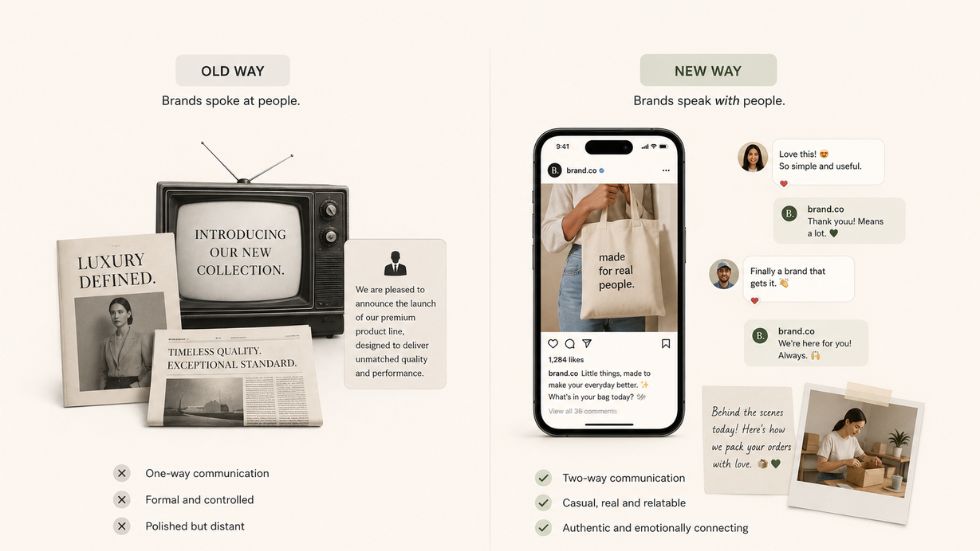
Years ago, most brands communicated through television commercials, magazines, newspapers, and carefully controlled advertising campaigns. Everything sounded polished, formal, and professional because companies believed professionalism was the most important part of branding.
But social media completely changed audience expectations.
People now spend hours every day consuming casual, fast, personality-driven content from creators who speak naturally and emotionally. Audiences became more connected to communication that feels authentic instead of overly scripted.
Because of this shift, brands that still sound robotic or emotionally distant often struggle to connect with modern audiences online.
Branding today feels much more conversational than traditional marketing ever did.
Also Read: How Social Media Creators Influence Brand Voice
Tone Shapes Perception Faster Than Design
Many businesses spend enormous amounts of time focusing on logos, packaging, colors, and visual identity while barely paying attention to how they actually sound online.
But tone of voice often shapes emotional perception much faster than visuals do.
A luxury brand using random internet slang can suddenly lose its premium feel. A youthful brand using stiff corporate language may instantly feel disconnected from its audience. Even a single customer support reply can influence whether people see the company as caring or emotionally cold.
The smallest communication details quietly influence trust, personality, and brand perception every day.
That’s why strong branding is not only visual design. It’s communication design too.
People Remember Brands That Feel Human
Most audiences scroll through hundreds of posts, advertisements, campaigns, and videos every single day. Very little of that content actually stays in their memory for long.
But brands that sound emotionally real stand out almost immediately.
Sometimes it’s a thoughtful reply in the comments section. Sometimes it’s a caption that feels surprisingly relatable. Sometimes it’s humor that feels natural instead of trying too hard to be trendy.
These moments make brands feel human rather than corporate.
And when people emotionally relate to a brand, the connection naturally becomes much stronger and more memorable.
Tone of Voice Influences Customer Experience

Branding does not stop once someone purchases a product. Communication continues shaping the customer experience long after the transaction is completed.
The confirmation email, delivery updates, support replies, refund messages, and even apology responses all contribute to how people emotionally perceive the company behind the product.
A cold robotic response can instantly damage trust and make the entire brand feel emotionally disconnected. At the same time, thoughtful communication can completely improve how customers feel during frustrating situations.
This is why tone of voice matters far beyond marketing campaigns or social media captions.
It influences the entire emotional experience audiences have with a brand.
Consistency Is What Makes It Powerful
One clever caption or funny social media post is not enough to create a strong brand voice. The real impact comes from emotional consistency over time.
When brands maintain the same tone across every platform, audiences begin understanding what the company stands for and how it wants people to feel emotionally.
Over time, the communication style itself becomes part of the brand identity.
Some companies become recognizable not because of their logo or products, but because of the way they sound online. That’s when tone of voice becomes one of the strongest parts of branding.
Tone of voice is one of the most overlooked parts of branding, yet it shapes how audiences emotionally experience a company every single day. People may notice visuals first, but communication is what creates connection, familiarity, and trust over time.
The way a brand sounds can make it feel warm, premium, playful, relatable, confident, or emotionally distant. And in a world where audiences constantly interact with brands online, those emotional impressions matter more than ever.
Today, the brands people remember are not always the ones shouting the loudest. They are the ones that know how to communicate in a way that feels natural, human, emotionally aware, and genuinely connected to their audience.
FAQs
1. What is tone of voice in branding?
Tone of voice is the personality and emotional style a brand uses while communicating with audiences.
2. Why does tone of voice matter in branding?
It shapes how people emotionally perceive a brand and helps build trust, familiarity, and connection.
3. Can tone of voice affect customer loyalty?
Yes. Brands that communicate consistently and authentically often create stronger emotional loyalty.
4. Is tone of voice different from brand voice?
Brand voice is the overall personality of the brand, while tone can slightly change depending on the platform or situation.
5. How can brands improve their tone of voice?
By understanding their audience, staying consistent, and communicating in a natural and emotionally relatable way.
